

380 Billion Ways to Miss Something
In Latin, the word for bird is avis, the root of aviation and aviary, but also the root of auspice, which originally meant to watch birds for signs. The Romans believed you could read the future in the way a bird flew, whether it veered left or right, climbed high or swooped low, whether it sang or stayed silent. They built an entire language of meaning around creatures that never knew they were being watched.
I have been watching birds for years now, though I couldn’t tell you exactly when it started or why. Bluebirds in the yard. Sparrows on the fence. Swallows sweeping across the sky like they’re late for something. They show up and I stop whatever I’m doing and I stand there, waiting. I think it started after the divorce, after I stood alone in that courthouse with its old wood stairwell that smelled like history and other people’s endings, though it could have been after my father died, after I learned that people leave and don’t come back and you stand there waiting for something to make sense and the world just keeps turning as if nothing happened.
You might think a life like this would be defined by darkness. That loss on top of loss would make a person give up. But grief does something strange. It changes the vocabulary of what deserves your attention. Suddenly a bird in the yard is more important than anything anyone is saying.
There are approximately 10,000 species of birds on Earth. Scientists estimate somewhere between 50 billion and 430 billion individual birds alive at any given moment. The gap in that estimate is staggering, a margin of error of 380 billion, which tells you something about how little we actually know about the creatures we share this planet with. We have mapped the human genome and landed machines on Mars and still we cannot say with any confidence how many sparrows exist. They are everywhere and uncountable, familiar and unknown, and I find this comforting in a way I can’t fully explain. That something can be ordinary and still hold that much mystery.
I don’t know how to write about this part. The almost. The not quite. I keep starting sentences and deleting them. What do you call someone who fits perfectly into a life that doesn’t exist? Is there a name for the space between what you want and what is possible? I keep trying to say something that doesn’t want to be said.
Birds mate in ways that have fascinated scientists for centuries. The albatross can live for sixty years and will spend those decades with a single partner, returning to them across thousands of miles of ocean, performing the same courtship dance year after year as if the ritual still matters, as if the choosing never stops. Other species are different. The house sparrow is socially monogamous but genetically promiscuous, meaning they pair up and build nests together and raise chicks side by side while also mating with other sparrows when the opportunity arises, an arrangement that sounds complicated until you realize humans do the same thing and just call it something else. What interests me is the courtship, the display, the effort that goes into being chosen. Male bowerbirds build elaborate structures decorated with colorful objects, blue feathers and bottle caps and flowers, spending hours adjusting the placement of a single petal to attract a female who will inspect the work and decide if it meets her standards. She is looking for something specific, though scientists debate what exactly, symmetry perhaps or color coordination or simply effort, proof that he cared enough to try. This is the part I can’t stop thinking about. The idea that love, or whatever we call it in birds, begins with someone building something beautiful and waiting to see if it’s enough. The idea that sometimes it isn’t. The idea that you can build and arrange and offer everything you have and still watch them fly away.
There are chances you don’t take. Doors you don’t open. People who stand in front of you offering something real and you look away because you’re not ready or you’re too afraid or the timing feels wrong, and by the time you turn back around they’re gone. Some people leave because you push them. Some people leave because you don’t ask them to stay. I have done both.
The Portuguese have a word, saudade, that has no direct translation in English. It means a longing for something you’ve lost, or something you never had, or something that may not even exist. The Welsh have hiraeth, which is similar but tied to place, a homesickness for a home you can’t return to or that never was. The Germans have sehnsucht, a deep yearning for an alternative life, a life unlived. It’s interesting that so many languages have built words for this feeling and English hasn’t quite managed it. We have longing, but that’s not enough. We have nostalgia, but that’s not quite right either. Maybe the feeling is so specific that it resists translation. Maybe English isn’t equipped for this particular kind of wanting.
I grew up on Chestnut Street in a house full of people. The kitchen always smelled like something cooking, cinnamon and summer and something else I’ve never been able to name. There was a magnolia tree in the backyard, huge, with hundreds of pink and purple flowers that opened in May like velvet stars. I climbed it. I read under it. There was a tire swing, because doesn’t childhood always have a tire swing? I carried a bird book everywhere, one of those field guides with the photographs, and I memorized the names and colors and classifications, the orders and families and genus and species. Something about the order of it made sense to me, the way the world could be organized if you paid enough attention.
Fear is a liar that tells the truth. It says this could hurt you and it’s right. It says you could lose everything and it’s right. What it doesn’t tell you is that you’ll lose everything anyway. That the people you love will leave or die or change into someone you don’t recognize, and so will you, and the only question that matters is what you did with the time before that happened. Whether you were there. Whether you let it matter.
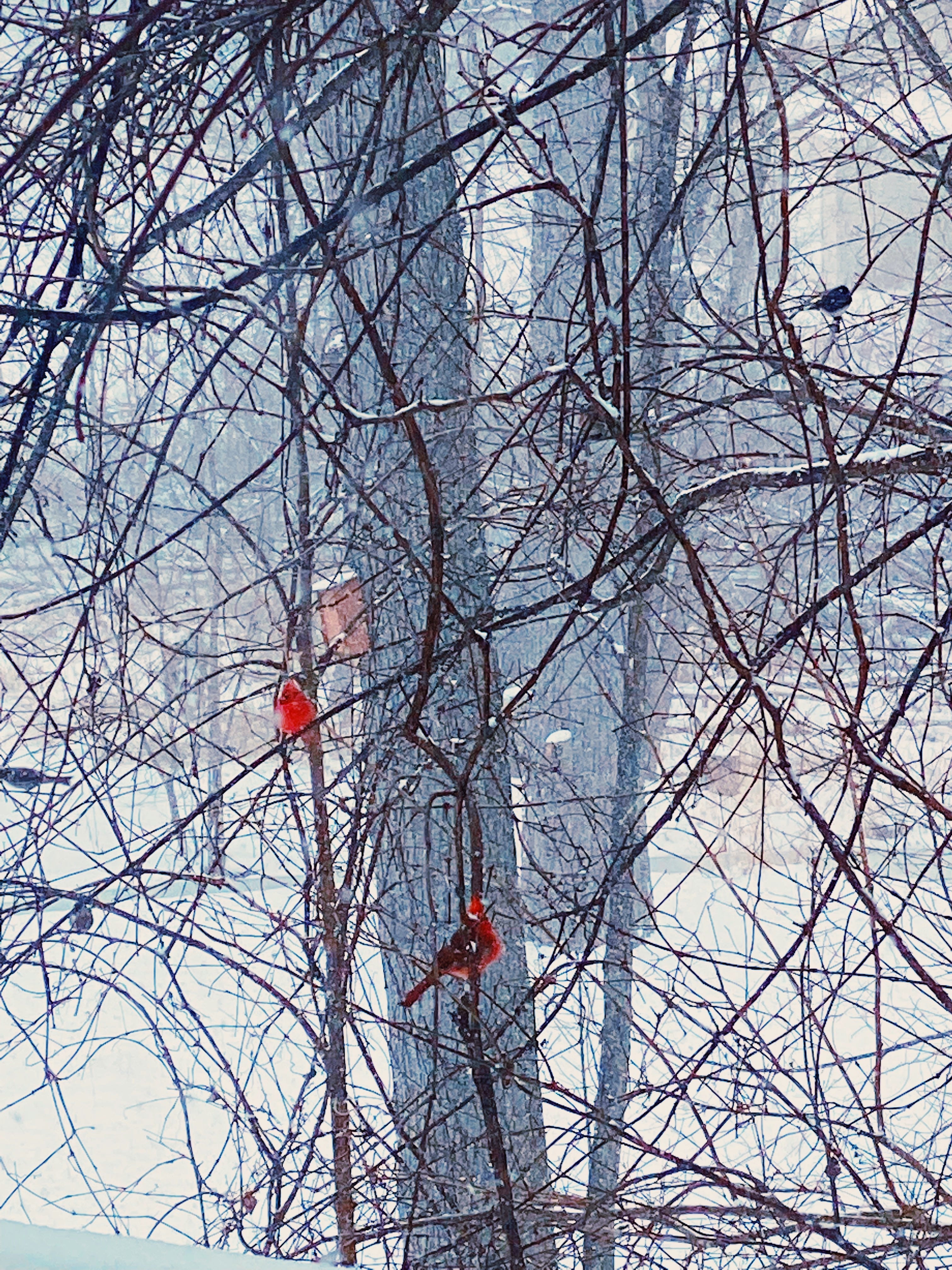
I still watch the birds. I still stand at the window and wait for them to arrive, and when they do I stop whatever I’m doing and I look. The bluebirds come in spring and I think about joy, about the way they dart through the trees like small blue flames, about the afternoon at the marshlands when they were everywhere and the world felt, for a moment, like it was holding me instead of the other way around. The sparrows come all year and I think about persistence, about how they are the most common bird on the planet and still I notice them, still I stop and watch. The swallows come in summer and I think about return, about how they travel thousands of miles and find their way back, about whether anything in my life will ever do the same. I don’t know if the signs the Romans believed in were ever real or just a story they told themselves to make the chaos feel like it meant something. Humans have always done this, looked for logic in randomness, searched for meaning in coincidence, called it fate or serendipity or grace when two things collide at exactly the right time. We want a reason that isn’t just chance. We want to believe that the bird appearing on the fence the morning after you finally let go of something means something, that the person who shows up when you least expect it was sent, that there is a design underneath all of it and we are not just stumbling through alone. Maybe it’s foolish. Maybe it’s the only thing that keeps us going. But I keep looking. I keep showing up at the window the way the birds keep showing up at the feeder, out of instinct or habit or something I don’t fully understand. What else is there to do? What else is there but to stand at the window and watch and wait and hope that this time, this time, the bird flies in the right direction
?