
Almost Sixteen: Grief and Child Loss

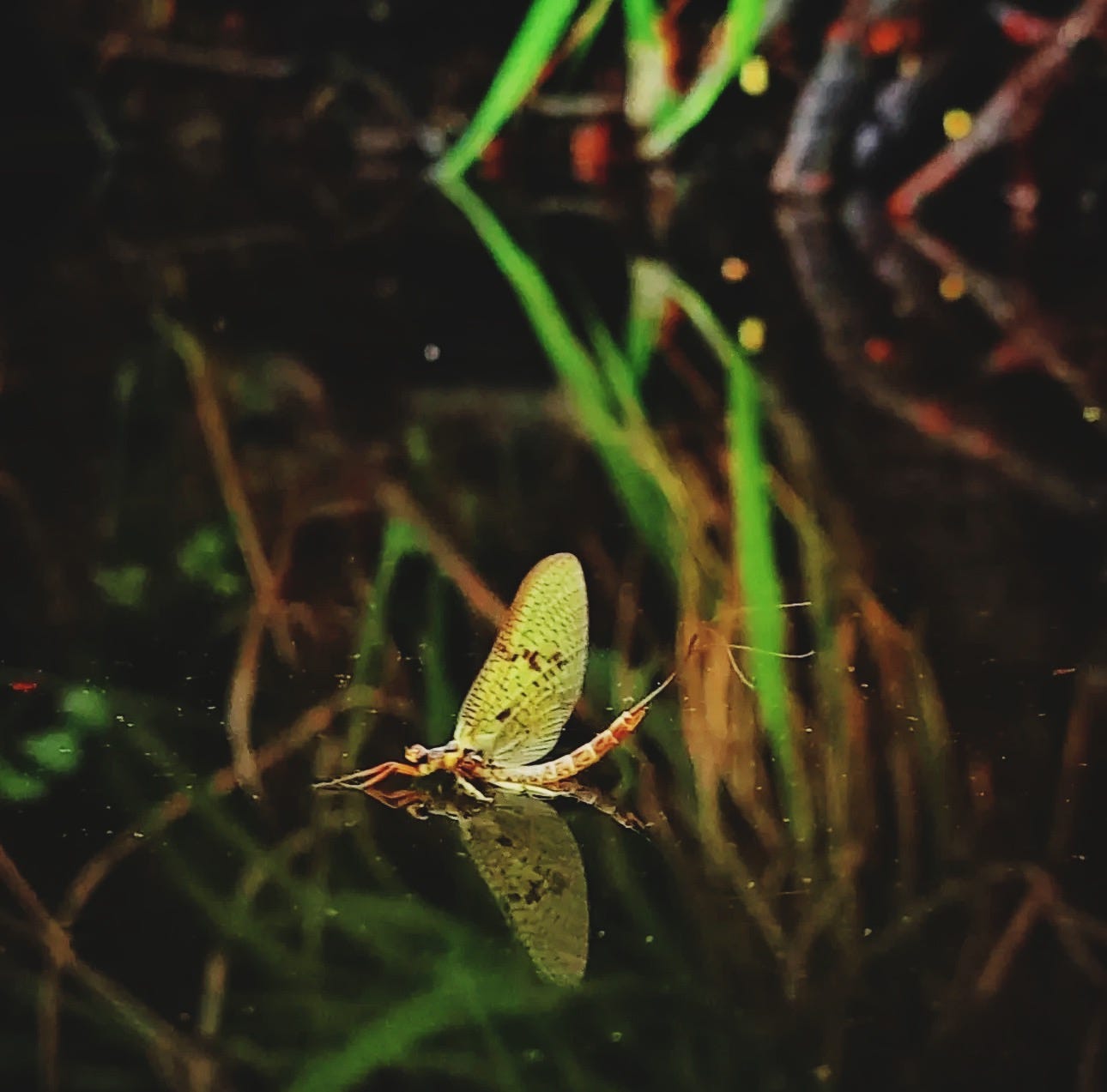
The mayfly spends three years at the bottom of a river before it has a single day of life above the water. An actual creature, three years in the riverbed, becoming something it will only be for a day. Biologists call the adult stage the imago, from the Latin for image, likeness, the self finally made visible. It emerges, finds a mate, and is gone before morning. Sometimes before the light even changes. Three years of becoming, for twenty-four hours of being. About the word almost. About a boy who was almost sixteen, who was always in the process of becoming someone I was never going to get to meet. He was four. He would be sixteen this year. I have not stopped counting.
Almost is not a small word. I almost bought the house. Almost got the job. Almost took the right road, said the right words, showed up at the right time. Almost let down my guard. Almost fought harder, loved deeper, listened better, stayed longer, left sooner. Almost made it work. Almost became the person I was trying to be. Almost let someone all the way in. Almost said the words that would have changed it. Almost took the call. Almost sent the text. Almost turned around. Almost tried one more time. Almost stopped trying. Almost knew when to hold on. Almost knew when to let go. My son was almost sixteen. He was magic and wonder and wholeness and he was almost here longer, almost had more mornings, almost had more time. My daughter died. My father died. My marriage ended. A love that kept almost arriving and then didn’t. I have always been one almost away from a different life.
How close was I, really. How many times did I stand within reach of a different life and not know it. How many moments when something was being offered and I said the wrong words or the right words too late or too carelessly or to the wrong person entirely. How many endings did I miss because they didn’t look like endings. How many beginnings. There is a specific quality to standing at the exact place where when you can feel everything on the verge of becoming something else and you stand there anyway, watching it stay exactly what it was. I told myself there would be another opportunity, another chance at the afternoon where I would do it differently, where I would be braver or more certain or less afraid of what saying it out loud would cost me. There is a version of me somewhere who took the call. Who asked him to stay. Who turned around. Who didn’t rewrite it into something safer before it left their mouth. Who would I be if it had all turned out different. Not better necessarily. Just different. Just the other branch of the same tree, the life that was always possible, the one I could sense without ever quite stepping inside. Why did I feel it in my chest and still turn away. Was that intuition or the last warning about a life I didn’t take. Is it too late to stop being almost. I don’t know. I have never known. I keep asking anyway, which is either courage or avoidance and I have never been sure which.
What I continue coming back to, no matter how far I get from it, is this. The mayfly gets one day and it is enough. Not enough in the way we use that word, resignedly, making peace with less than we wanted. Enough in the way that a thing can be complete without being long. My son had four years. Four years of light and happiness and completion, which sounds like almost, which sounds like not enough, and some days it is exactly that, it is a wound I cannot see around. But there are other days when I think about the mayfly and I think about my son and I think that maybe the length of a life and the fullness of a life are not the same measurement. That almost sixteen is not the same as almost a life. That he was not almost anything. He was entirely himself, for every day he was here, without remainder, without almost, without the particular longing that the rest of us carry like a second skeleton. He was complete. The almost was mine, not his. I am the one still standing at the threshold.
Almost comes from the Old English ealmæst, meaning for the most part, nearly all. All and most fused into a single word that means neither one nor the other, a word that lives permanently in the space between having and not having, between arriving and not arriving, between the life you are living and the life that was right there, close enough to feel the temperature of. It first appeared in writing around 900 AD and we have been using it for eleven centuries because apparently we have always needed it, apparently this has always been the central experience of being human, apparently we have always been standing in the space between what is and what almost was, and we have needed a word for that space, a word that acknowledges it without resolving it, a word that says yes, I know, I was there too, I was that close. One word. For eleven centuries. For everything that was most of the way there and not quite. For the house and the job and the love and the life and the boy who almost had more time. One word has had to mean all of this. It is not enough. It has never been enough. And still it is the only word we have.
What nobody tells you about almost is that the brain does not file it under lost. It files it under unfinished. And the brain cannot leave unfinished things alone, cannot set them down and walk away, cannot accept the incomplete the way it accepts the final, the closed, the fully over. It finds its way back to them at night, in the shower, on a day that has no reason to surface this, pulling at what remains of it, looking for the resolution that never came, convinced that if it just keeps returning, keeps examining it from different angles, keeps asking the same questions in slightly different orders, it will eventually find the ending it was looking for. Psychologists call this the Zeigarnik effect, named for Bluma Zeigarnik, a Soviet psychologist who noticed in the 1920s that waiters could remember every open order on their floor but forgot a completed order the second the bill was paid. We remember incomplete things more vividly, more persistently, more painfully than complete ones. The finished thing releases you. The almost never does. Almost is the most memorable thing there is. Almost is what the brain surfaces at 2am for the rest of your life, turning it over, looking for the ending, finding only the same unanswered question it has always been.
Almost stops the breath, metaphorically and then actually, a physical catch, a brief suspension, the body registering something the mind hasn’t caught up to yet. And then the thought that always follows, is there another version of this. Is there a life running parallel to this one where things did not go wrong, where the boy lived, where the love arrived, where I took the right road at the right time and felt the difference immediately in my bones. Is she out there somewhere, that other me, the one who chose differently at the crossroads, who felt the path change under her feet and knew it for what it was. The woods are the closest thing I have to an explanation. How if you take a wrong turn early enough, every subsequent turn is wrong, and you do not know you are lost because lost looks exactly like not lost when you have never seen the alternative. You are just walking. You are just living. And then something interrupts and you think, wait. Where am I. How long have I been here. Is the path still there. Is there a path back to the place where I made the turn, where I could make it differently, where the woods open into something I recognize as the life I was supposed to be living. I don’t know if it was one moment or a thousand moments that led here. I don’t know if there was a single wrong turn or just a series of slow surrenders, a degree off course every day for years until the distance between where I am and where I meant to be became uncrossable. What I know is that almost is not in your head. What I know is that the other life feels real. What I know is that I am still looking for the path back, which may mean I have not stopped believing it exists.
Here is the thing about almost. No one knows how close you were. You lived inside that knowledge alone, while the world moved on as if the almost had never happened, as if almost and never were the same thing. Almost is not never. Almost means you showed up. Never is the absence of even trying. Almost is the grief you can’t explain because nothing officially happened. And I have looked. What if almost isn’t unfinished. What if it is the finished version of your life. What if the almost is not the gap between what you wanted and what you got, but the sum of every time you tried, the evidence of a life that got close enough to feel it, close enough to know exactly what was being lost. The mayfly gets one day. My son got four years. I have been one almost away from a different life for as long as I can remember. Maybe almost is just another word for surviving. Which means I have been doing it right all along.