

An orca named Tahlequah carried her dead calf on her head for seventeen days, traveling over a thousand miles through the Pacific. When the body slipped off, she dove to retrieve it. She did this over and over until the calf’s corpse began to decompose in the salt water and she finally let the ocean take it. When I read this, I thought yes. I know the choreography. Not the logic of it, because there is no logic, but the rhythm. The repetition. When I was a child, I sorted everything. Crayons into color gradients. Books into alphabetical rows. My grandmother’s jewelry into lines across the carpet. I read the dictionary for fun. I preferred adults to other children. I was fluent in predictable things.
Neuroscientists have found that the brain does not distinguish between imagination and perception in kind. Only in degree. The same regions fire when we see a thing and when we picture it. If the internal image is vivid enough, the brain will treat it as real. I was three years old, spinning a globe in my hands, already unconvinced the earth was round. I wanted to be a priest and performed mass in my living room. I watched the grainy footage of the moon landing and could not make sense of it. A phone called the moon? I thought about time travel. The pyramids. How the granite was machined, not chiseled. Tolerances too tight. Cuts too smooth. I thought about a global tech cataclysm, survivors rewriting history as primitive. At four I named the boats in my grandparents’ painting the Niña, the Pinta, the Santa Maria, then wondered if any of it had actually happened. The trees whispered. My neighbor ate the cats that hid under his porch. I watched everything. I rarely spoke.
The day my son died he was wearing black pants and a black and gray striped shirt. I keep them in the top drawer of my closet. The sun beating. Sirens. The clock read 2:11 PM. Solemn faces. The monitors beeping. Conversations I could hear but not understand. Faces of pity. Faces of horror. Screaming that may have been mine. Metal on my tongue. The stretcher cold under my palms. The beeping. The sun. 2:11. The faces. His shirt. The screaming. My hands reaching. The beeping. The beeping. The beeping.
And then silence.
In 2025, Tahlequah carried another dead calf across the same ocean. The same water that took everything from her the first time. She went back anyway. She loved again. She lost again. The most defiant thing she ever did.
What kind of creature swims back into the water that already took everything? What kind of creature loves again knowing exactly how it ends?
Grief is a form of learning. The brain does not believe death the first time. Or the hundredth. Every time you reach for them and they’re not there, the brain takes note. Thousands of small teachings. Thousands of empty hands. Until eventually the brain stops expecting.
The brain stops expecting.
Do you understand what that means? The brain that once listened for footsteps stops listening. The arms that once reached stop reaching. The body finally learns to stop waiting for someone who is not coming back. It takes so long. It costs so much. And then it is done.
To love again is to undo all of it.
I still don’t understand it. Years pass and I am fine and then an ordinary afternoon splits open. He is not here. He is never going to be here. And the word never starts repeating. Never. Never. Never. And each time it repeats my heart climbs higher into my throat and my pulse is wrong and my skin is too tight and I want to run. I want to scream. I want to tear something apart with my hands because maybe if I break something it will stop. Maybe if I am loud enough it will reverse. Maybe if I destroy something it will bring him back. Maybe if I move fast enough I will wake up. But I don’t wake up. I am awake. I have always been awake. This is the dream that is not a dream. This is real life. This is the price of loving someone. This is what we agree to without knowing we agreed.
Here is what else I know While Tahlequah carried her dead calf, her pod stayed with her. They brought her salmon so she could eat. At one point, a group of females formed a tight circle around her and kept it for two hours. Scientists called it emotional attunement. Her family closed around her while she sat with her grief. She also gave birth to two calves that lived. She raised them. She taught them to hunt. Grief and joy, side by side, in the same body. After seventeen days, she let go. Scientists don’t know why that day. They don’t know what made her body finally release what her heart wouldn’t. Other mothers let go sooner. She didn’t. Within two years, she lost her sister, her nephew, her daughter, her mother. She became the matriarch of what remained. She leads them now.
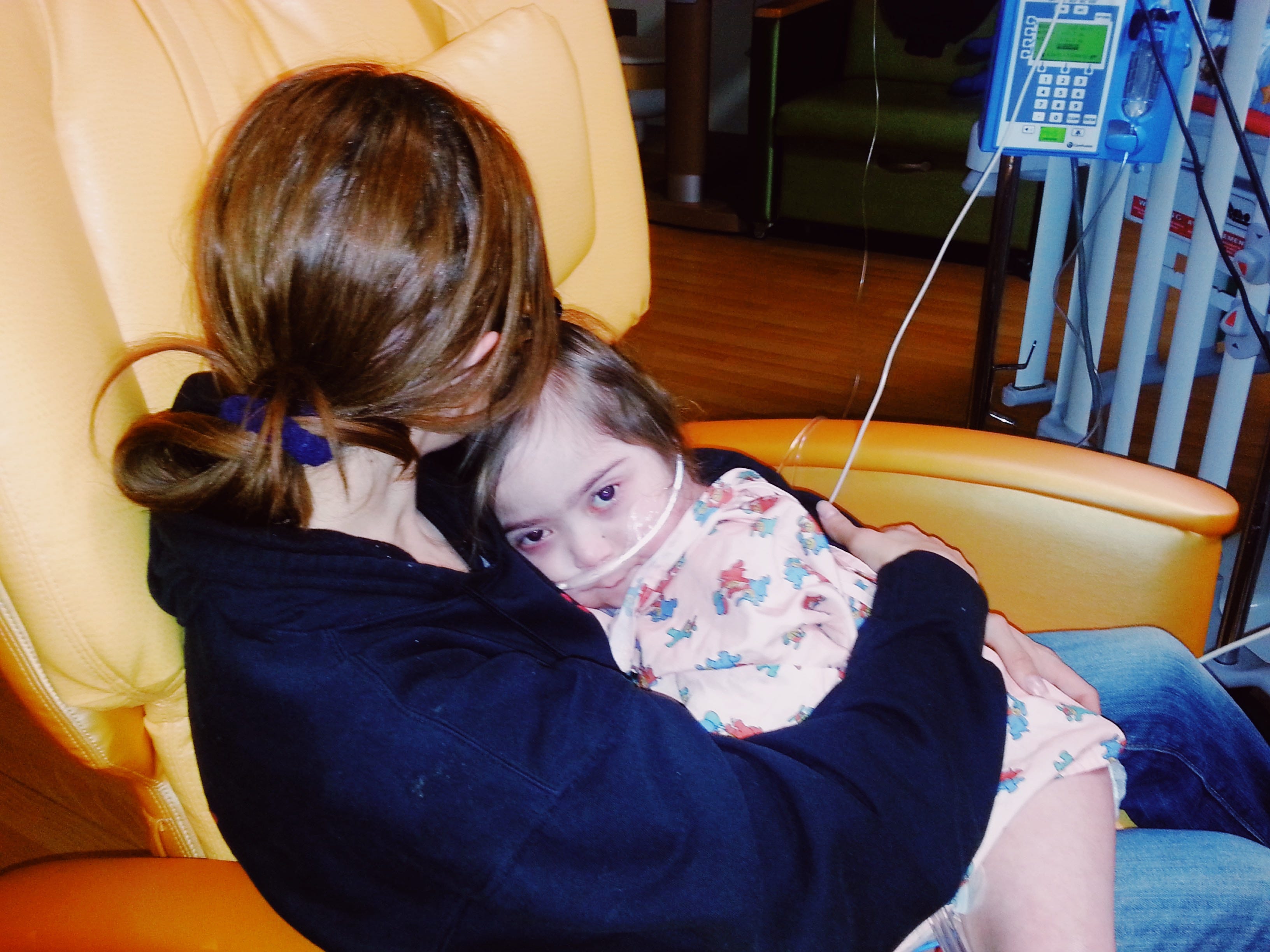
I don’t know why I survived. I don’t know why some people break and others don’t, or if the ones who don’t break are just breaking slower, in ways that don’t show. I don’t know why I adopted again. Twice. I don’t know why I walked back into the same rooms, the same diagnoses, the same terrible math of loving someone whose body might fail. I could say it was brave but I don’t think it was. I could say it was faith but I’m not sure that’s true either. Maybe it was just what my body knew how to do. Hold things. Carry them. Keep swimming in the only direction I knew, which was forward, which was toward love, which was toward the thing that could destroy me again. What kind of creature loves again knowing exactly how it ends? I don’t have an answer. Only a life that answers for me. Only arms that reached again. Only a drawer that still holds a black and gray striped shirt and a house that holds children and a heart that holds both, somehow, at the same time
.
This is truly, the most painful, most beautiful thing I think I’ve ever read. Overwhelmed.